|
25th June 1921 - 3rd April 2013
|
|
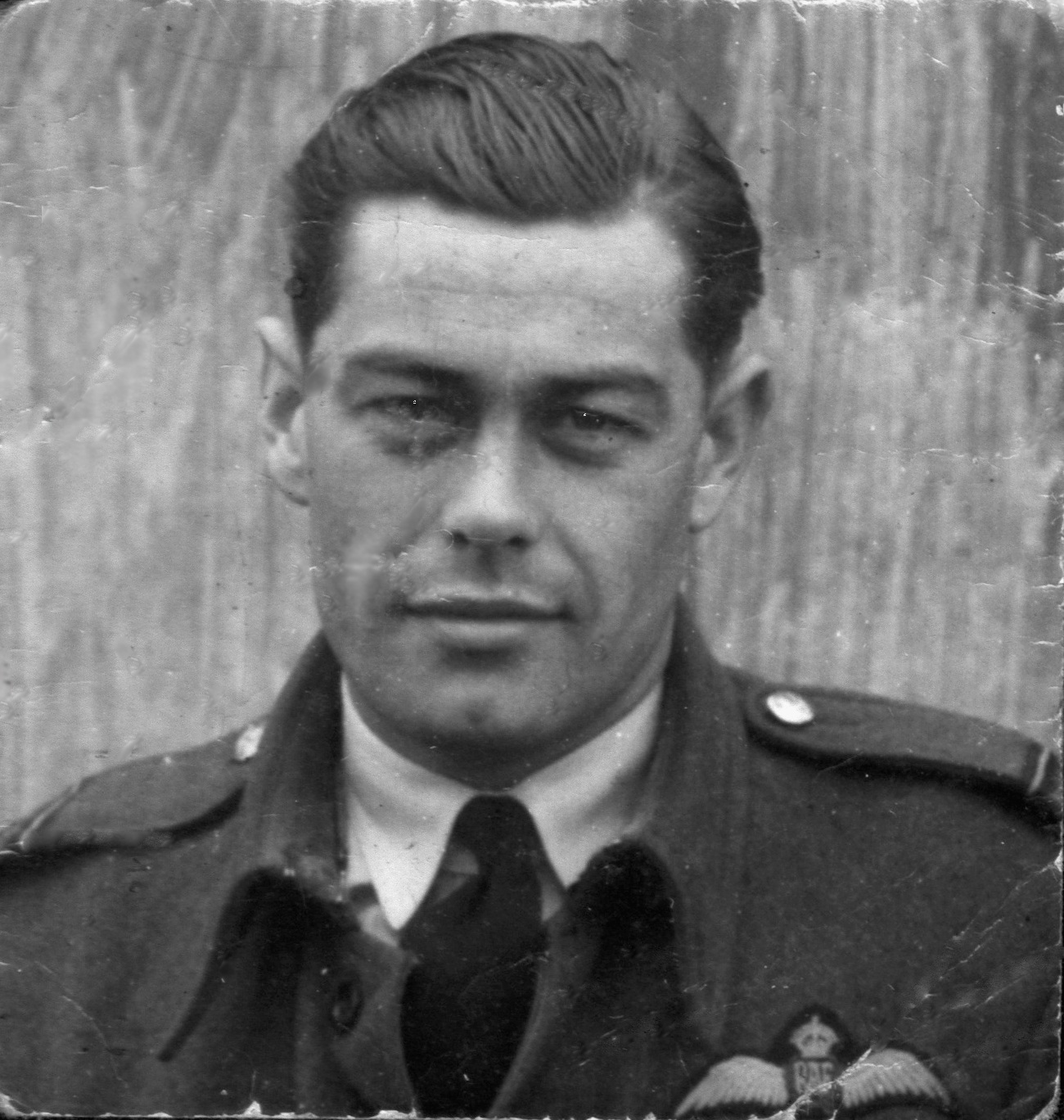
Bob Pugh aged 91 passed away peacefully in his sleep on 3rd April 2013. He is survived by his wife Sheila; his four children: Michael, Michele, Robert and Anthony and six grandchildren: Alexander, Katherine, Anna, Christopher, Stephanie and Oliver. He is predeceased by his two brothers, Jack (Pilot Officer, killed in action 1940) and Tom (Wing Commander, killed in action 1942).
Bob was born in 1921 in Farnborough, the youngest of three boys. His mother was a Queen�s Army Schoolmistress and so they travelled the world as young boys living in India and Egypt before their mother�s return to the UK in the early Thirties. All three boys were commissioned into the Royal Air Force, the eldest Tom was posted to France the day before war was declared and flew many hairy missions in the �Fairey Battle� before returning to the UK via Dunkirk!! |
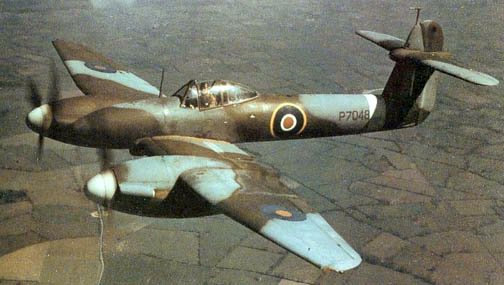 | Initially flying Hurricanes in the Battle of Britain, brother Tom went on to command 263 Squadron equipped with the twin engine Whirlwind fighters, winning his DFC. In 1942 he took command of 182 Squadron equipped with Typhoons, and on completing what was to be his third operational tour, he was promoted to Wing Commander but decided to fly one more trip as the new �boss� had not settled in yet. This was an attack on a destroyer in Dunkirk harbour, but his bombs were hit by flak before he could release them and his aircraft blew up. Bob�s other brother, a Pilot Officer, was killed in 1940 when trying to force land his Spitfire due to an engine failure and his subsequent sacrifice when aborting his approach into a field. The aborted approach was due to spotting, at the last moment, a farmer crossing in front with his plough and horses and being unable to avoid them unless he turned. (Bob met the farmer�s daughter some 40 years later who had witnessed the whole event.)
<--- Westland Whirlwind
|
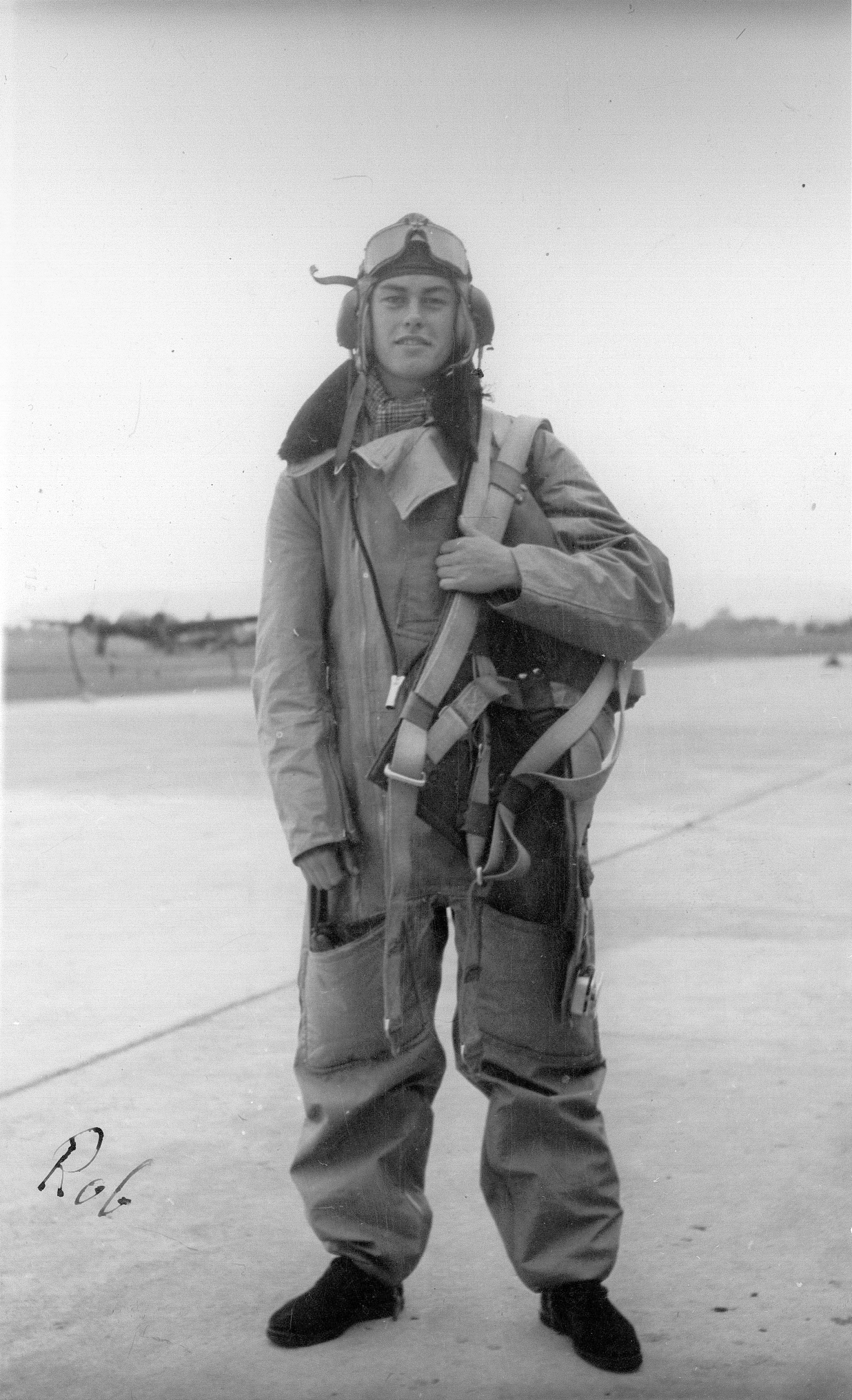 | Bob was commissioned into the Royal Air Force at 18 and on qualifying was posted to a maritime Squadron in Northern Ireland on Convoy escort and anti-submarine flying the Avro Anson. He was then transferred to the Central Flying School to become a QFI and then on to Canada to instruct on the Commonwealth Air Training Scheme. He recounted some hair-raising stories:
� we had no cold weather flying gear - just greatcoats and unlined leather gloves, flying stopping only when temperatures dropped to -40 degrees. Once on a ferry flight in the Anson with no heating just an ineffective �warm pipe� on the other side of the compartment it was so cold that I decided to get out of my seat and sit down on the floor beside the heater, holding the control column with my left arm raised above my head and I flew by watching the blind-flying instruments occasionally getting up to check my position. I eventually grew tired of this and resumed the pilots� seat�.
<--- 1939, Tiger Moth Training School Scotland
|
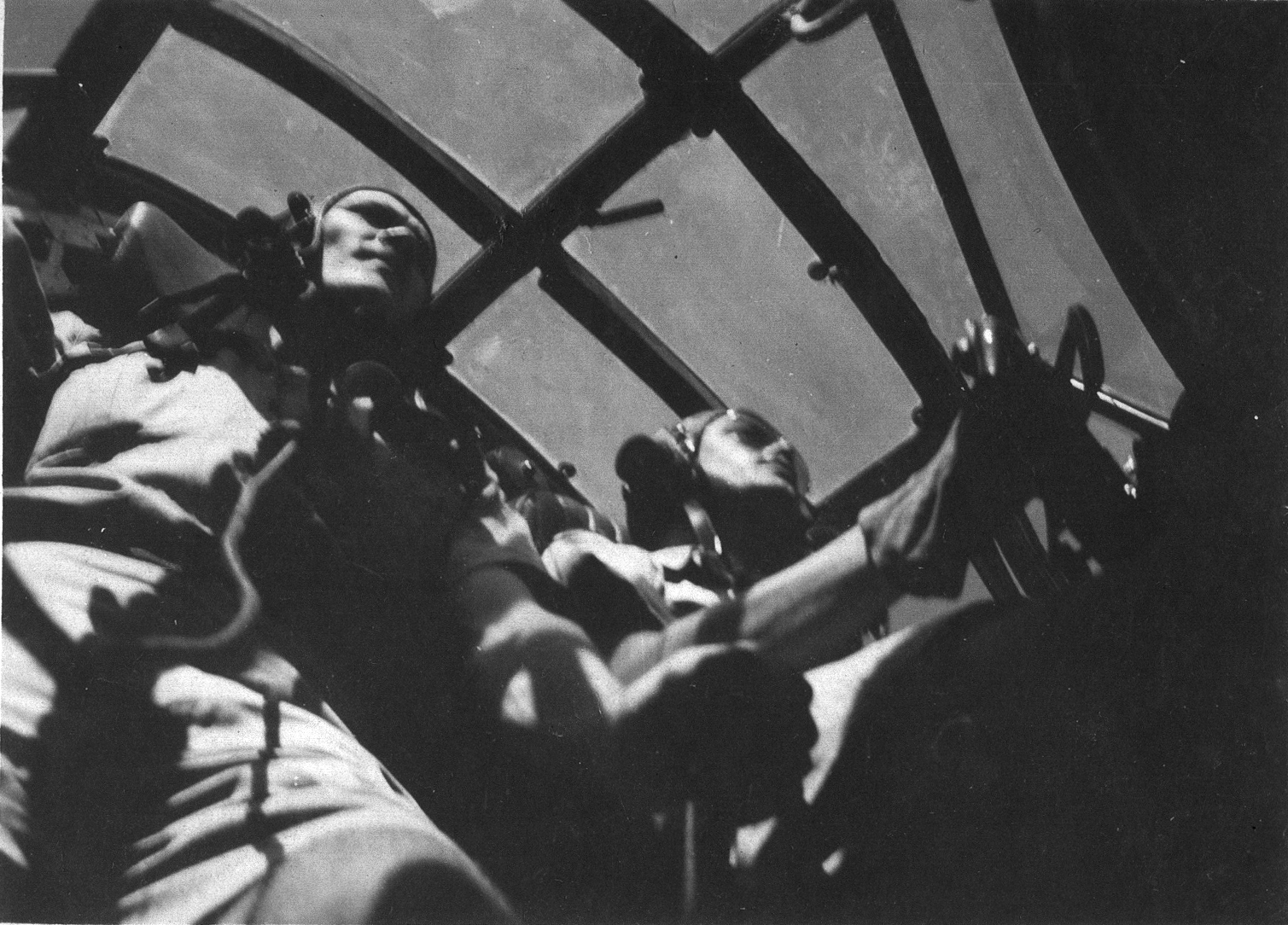 |
In 1942 he was posted back to UK, converted onto Wellingtons and then in 1943 sent out to the Middle East and Libya to fly torpedo bombing missions with 38 Squadron. One notable of many �Lies and War Stories� of his during this time concerns an unassuming entry in his log book dated June 8th 1943:
Convoy escort patrol. Tyre burst on take off, Port prop fell off at completion. Belly Landed,(night) - no one hurt.
This action resulted the following being written in his log book:
Note - written in blue pen!!
Endorsement in Green ink (none available in the western Desert)
Belly landing of Wellington LB 113 on 9th June 1943. The handling of the aircraft and the ultimate belly landing after the bursting of the starboard main wheel and the loss of the port airscrew is considered a very fine effort on the part of the pilot F/lt R.M.Pugh
signed.... W/Cdr 38 Sqn RAF, MEF
Unique !!!
<--- At the controls of a Wellington in 1943
|
Further postings as a flying instructor followed before he was sent in 1946 to help reform 616 (South Yorkshire) Squadron Royal Auxiliary Air Force in Finningley flying Mosquitos in a night fighter role. Their role was redesignated to day fighters and they were re-equipped with Meteors. After 3 years with 616 Squadron he was posted to the Home Command Examining Unit as one of 6 QFI�s responsible for flying standards throughout the UK. This posting and his experience on a wide variety of aircraft types allowed him to fly different aircraft many within the space of a day. For example his log book contains entries for flights in a Spitfire, Harvard and Mosquito or Mosquito, Meteor and Anson - all flown on same day. He was awarded the Air Force Cross in 1946 for his services as a flying instructor cited as �invaluable to the war effort�.
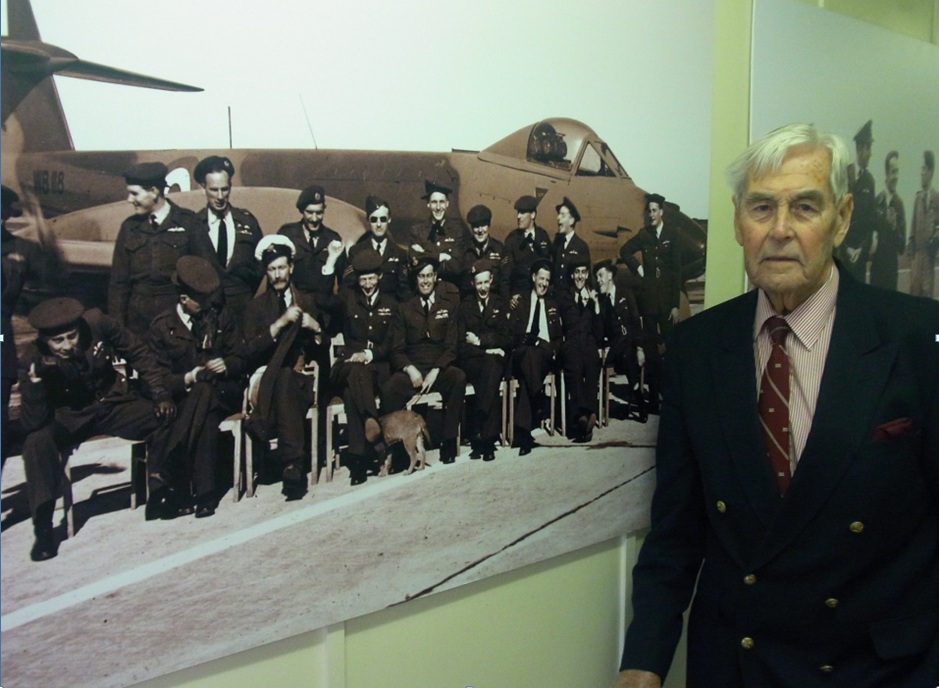
In 1951 he was posted to Germany to take command of No II (AC) Squadron and in the following year he married Sheila - and they had just recently celebrated their 61st Wedding Anniversary. He commanded �Shiny Two� through 1953 overseeing their conversion from Spitfires onto Meteors. At this time the Squadron was the only recce force in Germany and had two roles, �A� Flight was fighter recce, flying the cannon armoured Spitfire 14�s at low level and �B� flight, flying the unarmed Spitfire 19 on high level photo recce. The pilots were not interchangeable! Bob�s first task was to convert the pilots to jets � the Meteor Mk 9(FR) and Meteor Mk 10 (PR). This he successfully carried out and during his tenure many noteworthy events were hosted, awards won and many distinguished visitors were accommodated. The squadron diaries record visits by General Eisenhower, Field Marshal the Viscount Montgomery, the then Minister of Defence Lord Alexander and the CinC NATO General Norstadt amongst others. However, it was not all work and being stationed in Germany and having many detachments to the island of Sylt and an agreeable shift system in operation that it was not for nothing that it was considered that the "AC" in the squadron title stood not for "Army Co-operation" but, rather, "Alcohol Consumption"! An indication of the fun they had can still be seen on the large black and white photograph outside the OC II Sqn office in Marham with the motley group standing in front of a meteor with dress hats askew! Bob is the one holding the dog!
|
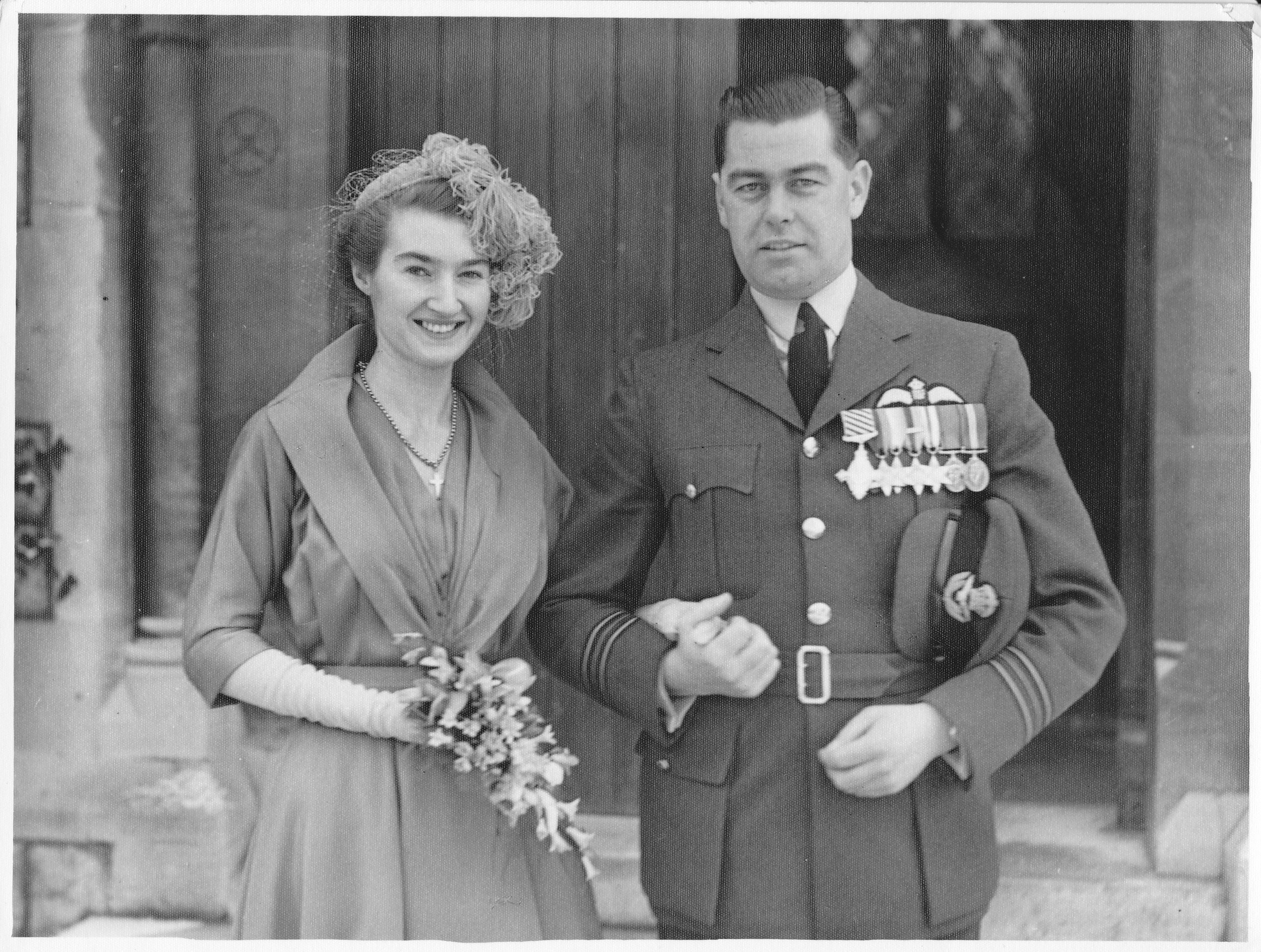
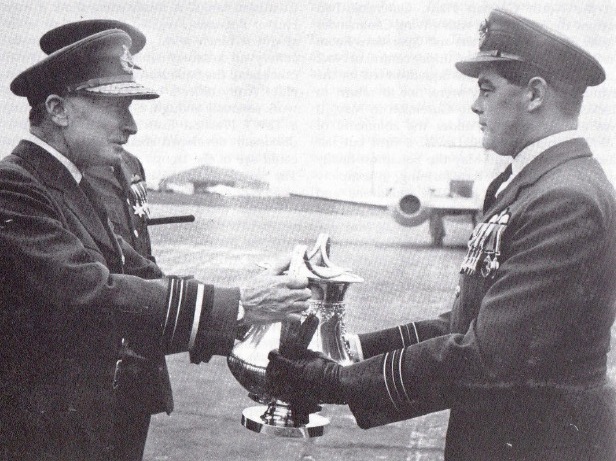 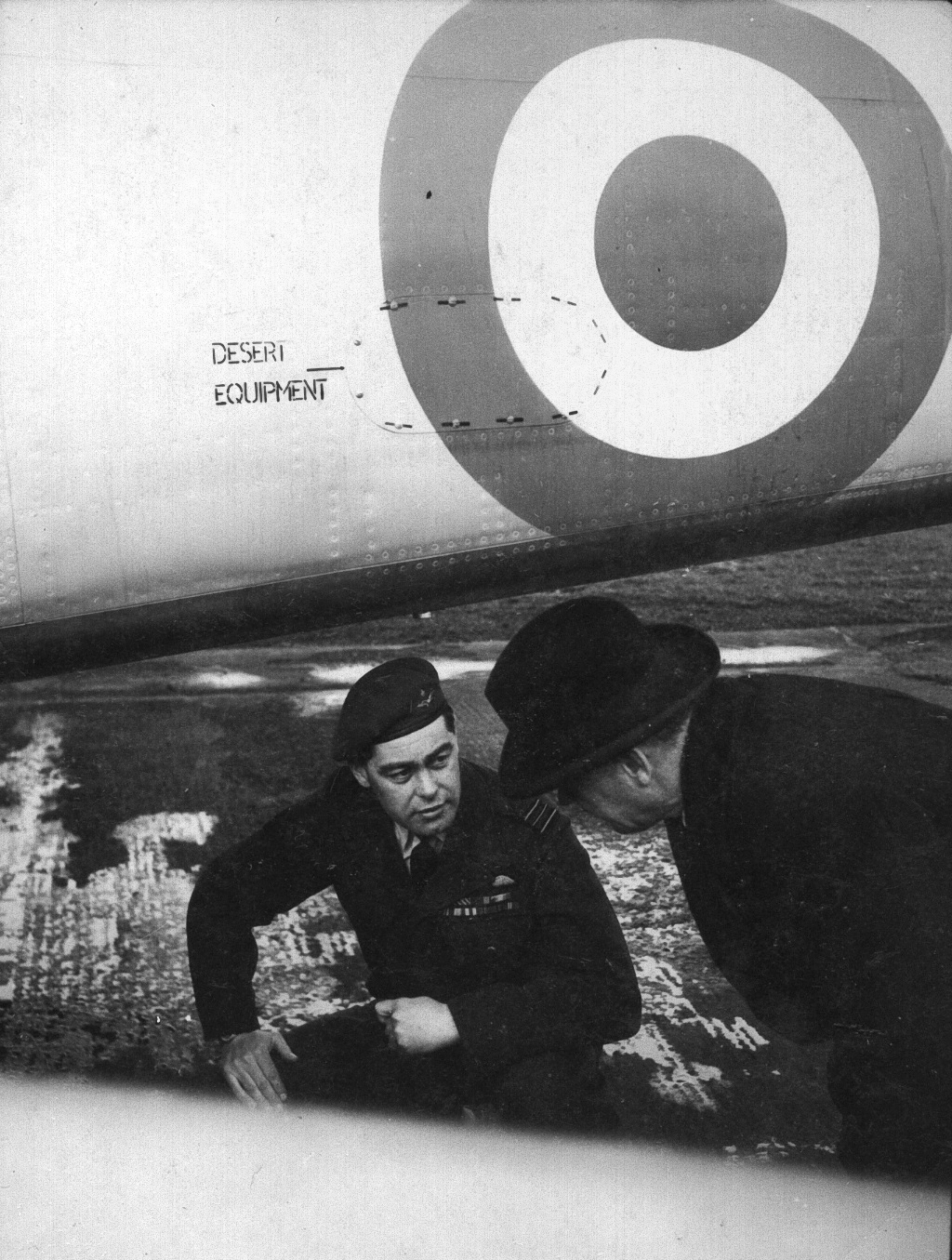 . . 
|
From the left,
1. Winning the Duncan Trophy (Best All-Weather Flying Record)
2. A visit by the Minister of Defence 1951
3. Bob marries Sheila 1952
|
On leaving the Squadron in 1953 Bob had several staff officers� posts but always managed to fly, whether it was target towing, commissioning flights, glider towing or Air Training Corps familiarisation flights. In fact he was doing as many hours as regular squadron pilots.
In 1967 he resigned from the RAF to join Airworks Ltd and was seconded to the Royal Saudi Air Force, to become the Officer Commanding the �Advanced Training Course� on the BAC Strikemaster and then he later moved on to the Operational Conversion Unit flying the American T33. He flew in Saudi for over 6 years although his family remained in Farnborough. After his return to England he became employed as a course organiser and lecturer at the Centre for International Briefing. He then moved on to become Director of Human Resources in London for an American Company with interests in Saudi Arabia and the Middle East, and from which he resigned in 1979. During this time even though he had hung up his flying boots he still managed to fly, taking a part time flying instructor's job at the local flying school at Blackbushe. He retired in 1979.
For over 40 years his view from the sitting room window was on to the final approach to runway 24 at Farnborough so he always had aircraft in his field of view. Even more poignant was the fact that No II Squadron was formed in Farnborough back in 1912, a town he was born and raised in.
During his time as a pilot Bob qualified as:
Qualified Flying Instructor
General Reconnaissance Pilot
Torpedo Bomber Pilot
Master Green Card (Instrument rating)
Instrument Rating Examiner
Flying Hours (including 575 night) � 6687.30
He flew over 85 different Marks and Types of aircraft ranging from pre-war biplanes - the Tiger Moth and the Gloster Gladiator (of Malta, Faith Hope and Charity fame) - to the Spitfire, Mosquito, Wellington, Meteor, Vampire, Hunter, BAC 167 - Strikemaster and T33 to name but a few.
Post note by Michael Pugh:
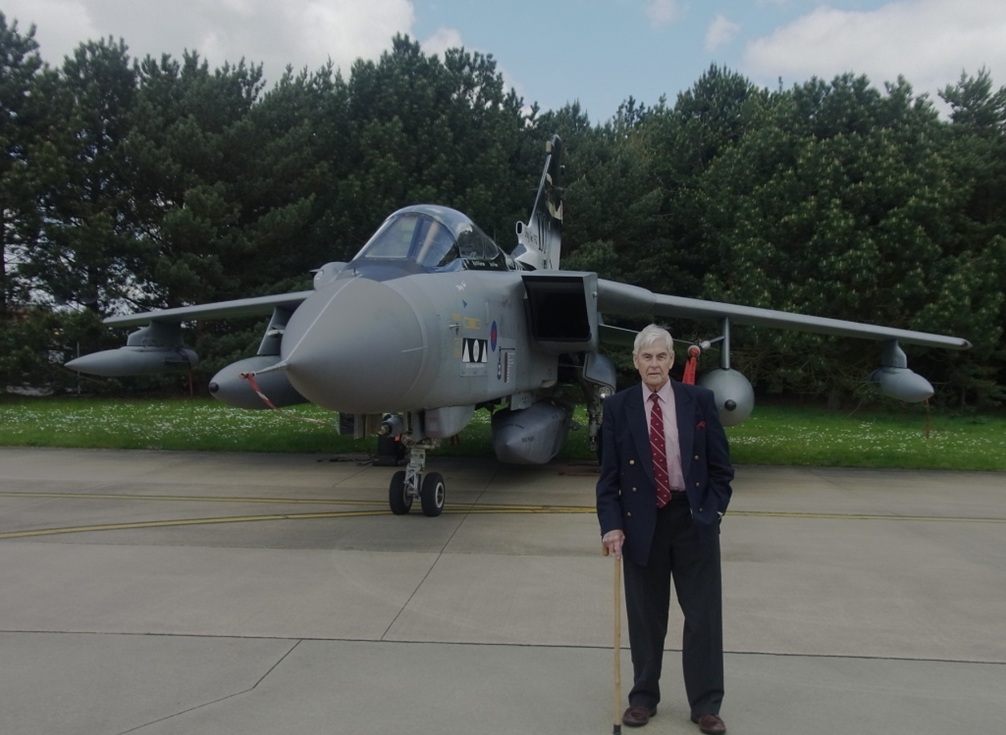
My father lived long enough to take part in a very memorable and very fitting occasion when he attended the 100th Anniversary of Two Squadron at RAF Marham on the weekend of 12th /13 May 2012. It was with great pride and pleasure that I was able to accompany him to this event. He really enjoyed meeting everyone and we were both well looked after. Special thanks to W/Cmdr Nick Tucker-Lowe who gave so much of his time to make my father feel welcome. A lasting memory for me was my father�s insistence on climbing up the steps to look inside the cockpit of one of the Tornados and the picture I took of him in the crew room at Marham standing beside the photograph of him and his squadron hats askew and all smiles. 60 years separating the two pictures but a fitting tribute and closing memory.
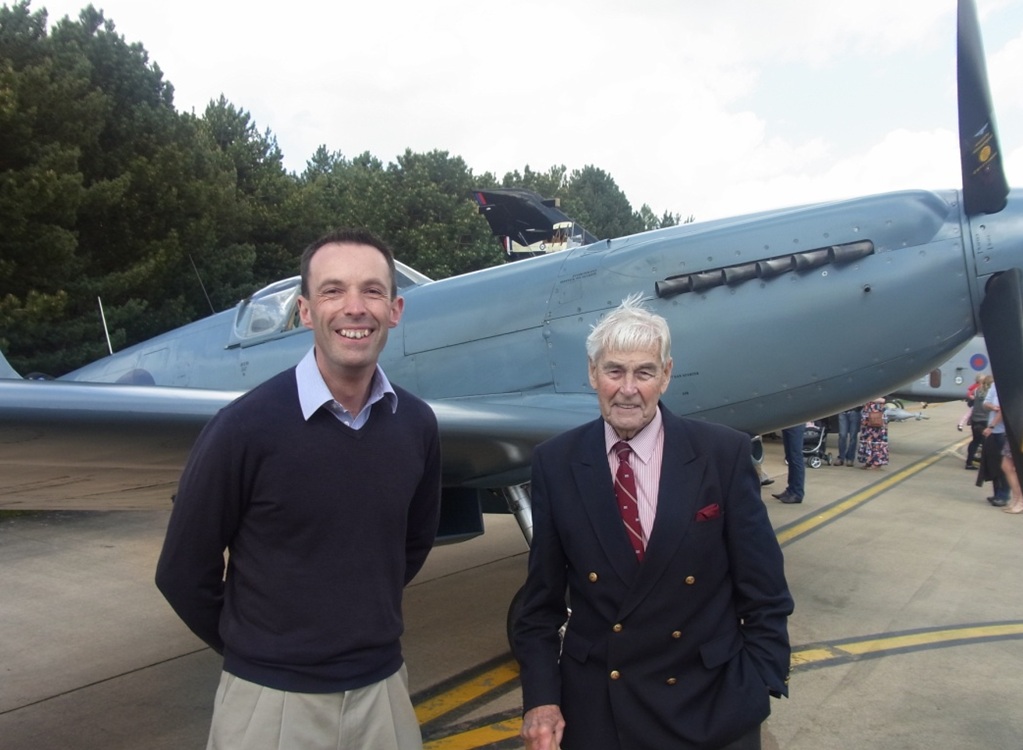  . . 
He was a friendly, warm, welcoming and humorous man, at the same time modest and private. Highly principled and strong willed, he was well liked and respected by all who met him. Bob was a keen walker and spent a lot of his retirement taking �Pippa� their dog over the Ash Ranges. He and Sheila recently celebrated their 61st wedding anniversary and moved last year to a retirement flat in Glastonbury to be near to their daughter Michele.
Bob was a loving husband, father and grandfather who will be sorely missed and remembered with affection by all who knew him.
|
|